 HOT LINE: +8613511485712
HOT LINE: +8613511485712

INDUSTRY NEWS
INDUSTRY NEWS
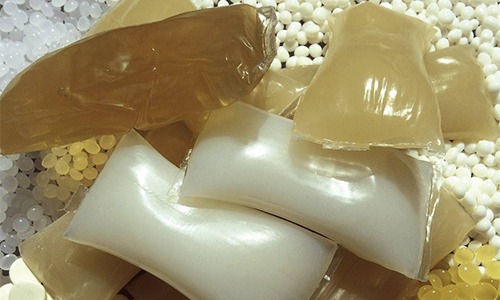
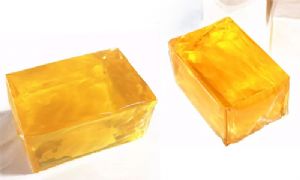
Curing method The adhesive is cured by physical methods, such as solvent volatilization, emulsion coagulation, melt cooling and chemical methods.
(1) Hot melt adhesive: The polymer melt can be solidified by cooling after infiltrating the adhered surface.
(2) Solution adhesive: With the volatilization of the solvent and the increasing concentration of the solution, it gradually reaches a certain strength after curing.
(3) Emulsion glue: As the water in the emulsion gradually permeates into the porous adherend and volatilizes, the concentration of the emulsion increases continuously, and finally, the polymer colloid particles are agglomerated due to the surface tension. When the ambient temperature is high, the emulsion condenses into a continuous film, while when the ambient temperature is low and the minimum film forming temperature (MFT) is low, a white discontinuous film is formed. Emulsion glue is mainly polyvinyl acetate and its copolymer and acrylate copolymer.
(4) Thermosetting Adhesives Multifunctional monomers or prepolymers of thermosetting resins undergo polymerization, and with the increase of molecular weight, the molecular chains change and cross-link at the same time, forming insoluble gelation or basic curing. Extending the curing time in a certain range is not equivalent to increasing the curing temperature, and it is difficult to compensate for reducing the curing temperature by extending the curing time. Because there is a certain chemical interaction between the adhesive and the surface of the adherend, it needs a high enough temperature.
Curing pressure:
Conducive to the full infiltration of adhesive on the surface; It is beneficial to eliminate low molecular volatiles produced by adhesive curing reaction; Conducive to the discharge of residual volatile solvents in the adhesive layer; Conducive to controlling the thickness of the adhesive layer; Adhesives with high viscosity often have a thick adhesive layer, and the adjustment of curing pressure controls the thickness range of the adhesive layer.
Leave it for a period of time after gluing, which is called pre-curing. When the viscosity of the adhesive solution becomes larger, apply pressure to ensure the uniformity of the thickness of the adhesive layer.
Curing temperature:
The curing temperature is too low, the crosslinking density of the adhesive layer is too low, and the curing reaction is incomplete; If the curing temperature is too high, it will easily lead to the loss of adhesive solution or embrittlement of adhesive layer, which will lead to the decrease of adhesive strength. Heating is beneficial to the molecular diffusion between adhesive and adhesive joint, and can be beneficial to the formation of chemical bonds.
(1) oven direct heating method: use a blast device to make it evenly transfer heat. (2) External heating method: heat is quickly transferred to the inside of the adhesive layer, which greatly shortens the curing time. Sonic heating method: for viscoelastic adhesives and solvent-free adhesives, it is not suitable for thermosetting rigid adhesives.

Tel: +8613511485712
Email: jaynn@jaynn.com
Add: No.1,Area C,Wandong Intelligent Manufacturing Industrial Park,Zhejiang Province,China.
SUBSCRIBE
Get the latest updates in real-time


Scan WeChat

Scan Tiktok