
 HOT LINE: +8613511485712
HOT LINE: +8613511485712

INDUSTRY NEWS
INDUSTRY NEWS
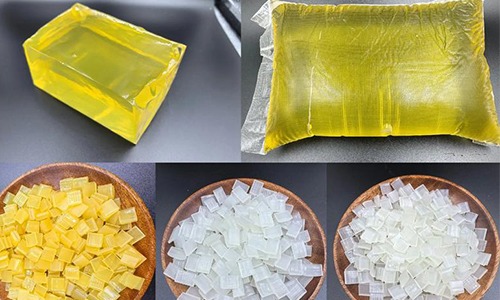
What is a hot-melt adhesive? A hot-melt adhesive is a type of thermoplastic material that requires the polymer to be heated above its melting point to melt it. Compared to other types of adhesives, hot-melt adhesives offer the following key advantages:
1) Hot-melt adhesives do not use solvents, thereby avoiding associated environmental issues;
2) They cure rapidly, making the application process easy to automate;
3) They require less storage and handling space;
4) They offer high formulation flexibility, enabling them to meet diverse cost and performance requirements. Typical Components of Hot-Melt Adhesives Hot-melt adhesives primarily consist of three components: polymers or polymer blends, tackifying resins, and waxes or oils. Waxes and oils serve the same function, the distinction being that oils are liquid whilst waxes are solid. In addition to the above components, other additives such as antioxidants, fillers, UV stabilisers or pigments may be incorporated into hot-melt adhesives. The main components of hot-melt adhesives and their functions are as follows: 1) The base polymer forms the molecular backbone of the hot-melt adhesive system, imparting inherent strength, chemical resistance and appropriate application characteristics to the adhesive; 2) The addition of tackifying resins enhances the adhesive's initial tack and modifies the base polymer; 3) Processing oils and waxes are used to adjust the adhesive's viscosity and curing time; 4) Both tackifying resins and processing additives influence the glass transition temperature (Tg) and melting point of the final product;
5) Antioxidants are used to provide oxidation resistance; their protective effect is directed more towards the polymer in the application state than towards the final bonded joint;
6) The addition of UV stabilisers or inhibitors can improve the adhesive's light stability;
7) Fillers are used to finely adjust certain properties of the hot-melt adhesive, such as melt viscosity, coefficient of thermal expansion and curing time.
Requirements for Hot-Melt Adhesive Formulation Design An effective hot-melt adhesive formulation must meet the following core requirements for its components:
1) To ensure wetting of the substrate, the hot-melt adhesive must possess extremely low viscosity in the molten state;
2) The cooling rate should not be too rapid, otherwise the substrate will not be sufficiently wetted;
3) Application requires the use of specialised application equipment;
4) Upon curing, it must form a material with high cohesive strength and maintain good bonding performance during use.
The Bonding Process of Hot-Melt Adhesives Hot-melt adhesives are applied in a molten state and develop strength through curing and crystallisation. Although some types of hot-melt adhesives may cross-link over time or under the influence of external energy, general-purpose hot-melt adhesives retain their thermoplastic properties after application and gelation. When heated, hot-melt adhesives melt into a liquid state and are applied between two substrates. Upon cooling, the adhesive cures and forms a solid state. The cooling rate of the adhesive droplet primarily depends on the droplet size, the properties of the substrate, and the temperature. If the substrate is not insulated, the cooling time of the hot-melt adhesive will be significantly prolonged. Conversely, if the hot-melt adhesive is applied to a preheated substrate surface and allowed to cool slowly together with the substrate, a stronger bonded joint can be formed. If the contact area between the substrates is large, adhesive overflow will be observed when the second substrate is pressed against the first. The larger the surface area of the substrates, the faster the hot-melt adhesive cools. Once the hot-melt adhesive has cooled and cured, the two substrates will be firmly bonded.
Mixing Characteristics of Butyl Rubber and Solutions to Common Problems
2026-03-21
Butyl Rubber Waterproof Membrane in the Leakage Repair Project of an Industrial Plant
2026-03-20
Dedicated to providing customers with high-quality First Aid tape making machine products and services
2025-08-20
Technical requirements and product standards for Multi function laminated slitting machine
2025-08-19
Tel: +8613511485712
Email: jaynn@jaynn.com
Add: No.1,Area C,Wandong Intelligent Manufacturing Industrial Park,Zhejiang Province,China.
SUBSCRIBE
Get the latest updates in real-time


Scan WeChat

Scan Tiktok