
 HOT LINE: +8613511485712
HOT LINE: +8613511485712

INDUSTRY NEWS
INDUSTRY NEWS
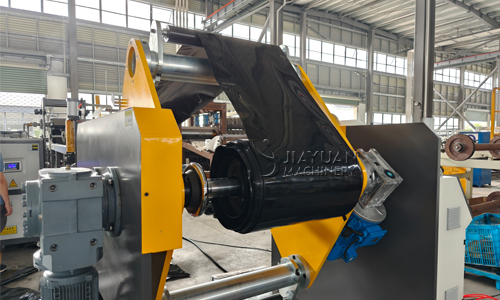
The blending of butyl reclaimed rubber with butyl rubber is used to produce high-air-tightness rubber products such as automobile and motorcycle inner tubes, tire air-tightness layers, vulcanization bladders, as well as heat-resistant rubber products such as heat-resistant rubber sheets and heat-resistant conveyor belts, and corrosion-resistant products such as anti-corrosion linings. This approach can effectively reduce raw material costs while ensuring product quality. Compared with butyl reclaimed rubber, butyl rubber is more difficult to mix and is prone to several issues during the mixing process.
1. Molecular Structure and Mixing Characteristics of Butyl Rubber
Butyl rubber is a copolymer of isobutylene and a small amount of isoprene. It is a highly saturated rubber with no double bonds in its molecular structure, offering excellent aging resistance and chemical corrosion resistance. Butyl rubber exhibits high cold flow, and the dispersion of compounding ingredients is challenging. Therefore, special attention must be paid to controlling process parameters during mixing. Common mixing methods for butyl rubber include the feed-stock method and the thin-pass method, which promote uniform dispersion of compounding ingredients and improve the uniformity of the rubber compound.
2. Common Problems in Butyl Rubber Mixing
(1) Issues such as roll release, sticking to rolls, and dispersion failure in highly filled compounds during butyl rubber mixing
Roll release during butyl rubber mixing can be resolved by appropriately lowering the roll temperature. Sticking to rolls can be addressed by increasing the temperature or adding roll-release agents (such as zinc stearate or low-molecular-weight polyethylene). For dispersion failure in highly filled compounds, it can be managed by increasing the batch capacity or using the reverse mixing method. It is important to note that due to the high saturation of butyl rubber, no other raw rubbers should be mixed in during processing to avoid affecting the quality of the compound. The equipment must be thoroughly cleaned before mixing.
(2) Premature vulcanization of butyl rubber
Butyl rubber may undergo premature vulcanization during mixing due to localized overheating or excessive accelerator dosage. Strictly control the mixing temperature, and rationally select and reduce the amount of accelerator added. It is recommended to use accelerators with slow temperature rise characteristics to minimize heat accumulation and prevent premature vulcanization.
(3) Uneven mixing of butyl rubber
Improper mixing parameter settings or incorrect equipment usage can easily lead to poor dispersion of fillers in butyl rubber, resulting in inconsistent physical properties. Adjust the temperature and speed of the mixer appropriately, and regularly inspect the mixer's screw and rotor to avoid operational errors caused by wear. Control the heating rate during mixing and regulate the addition speed of powdered fillers to ensure uniform dispersion within the base material.
(4) Poor surface smoothness of butyl rubber
Uneven filler distribution and improper selection of plasticizers during butyl rubber mixing can lead to rough surfaces on the mixed product. Use fillers with good dispersibility, such as highly dispersible silica, and ensure that the plasticizer is fully absorbed during the mixing process.
Butyl Rubber Waterproof Membrane in the Leakage Repair Project of an Industrial Plant
2026-03-20
Dedicated to providing customers with high-quality First Aid tape making machine products and services
2025-08-20
Technical requirements and product standards for Multi function laminated slitting machine
2025-08-19
Precautions for using High Speed Slitting Machinery in high, low, and humid environments
2025-08-16
Tel: +8613511485712
Email: jaynn@jaynn.com
Add: No.1,Area C,Wandong Intelligent Manufacturing Industrial Park,Zhejiang Province,China.
SUBSCRIBE
Get the latest updates in real-time


Scan WeChat

Scan Tiktok